


News
On September 28, the 2026 World Design Cities Conference (WDCC) opened in Shanghai, and the recipients of the Frontier Design Prize (FDP) were officially announced. Massachusetts Institute of Technology (MIT) professor and former MIT Media Lab director Dava J. Newman received the Distinguished Contribution Prize. The team from Rihui Xincun Primary School in Shanghai's Xuhui District won the Innovation of the Year (K12) Prize for its project, Rixin City.
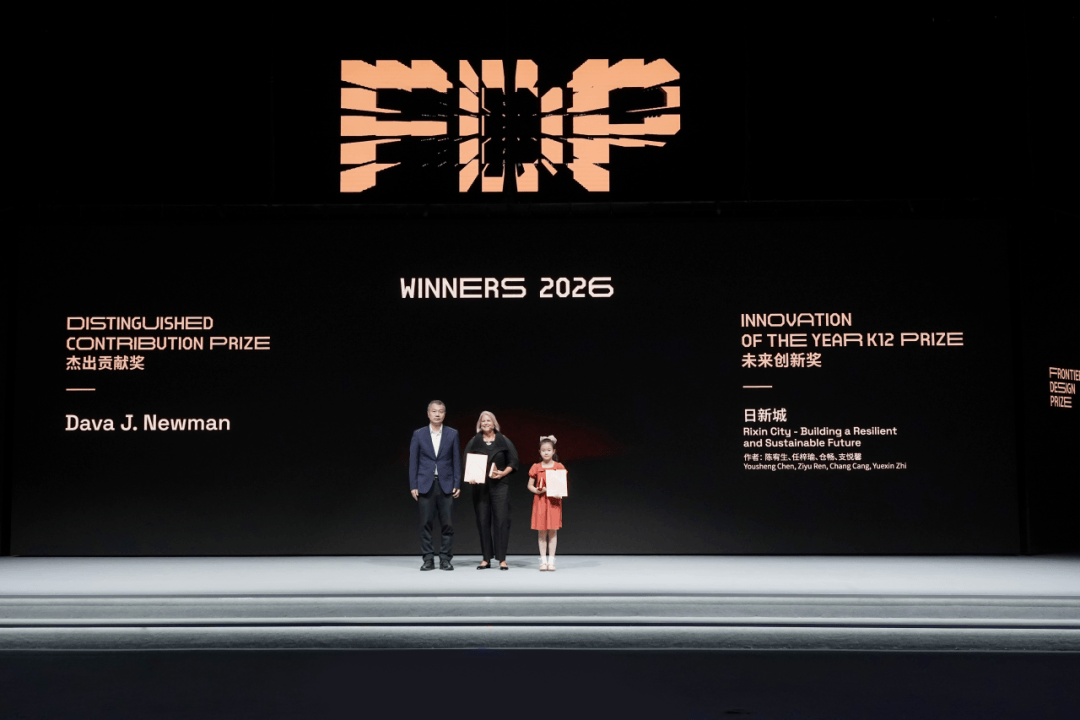
Shanghai Vice Mayor Chen Jie presents prizes to Dava J. Newman (Distinguished Contribution)
and a representative of the Innovation of the Year (K12) winning team.
A scientist pushing the boundaries of human exploration and a group of young students using systemic design to address real-world challenges shared the stage as award recipients. Together, they once again clearly conveyed Shanghai's vision for design to the world: what good design means and where design should go next.
The Frontier Design Prize is a flagship award of the World Design Cities Conference. Held under the guidance of the Shanghai Municipal People's Government, it selects recipients from around the world. The Distinguished Contribution Prize honors design pioneers whose work transcends disciplinary boundaries and has global impact. The Innovation of the Year (K12) Prize celebrates the thinking and imagination of the next generation of designers. It is also one of the few professional design competitions internationally dedicated to primary and secondary school students.
FDP2026 Laureate
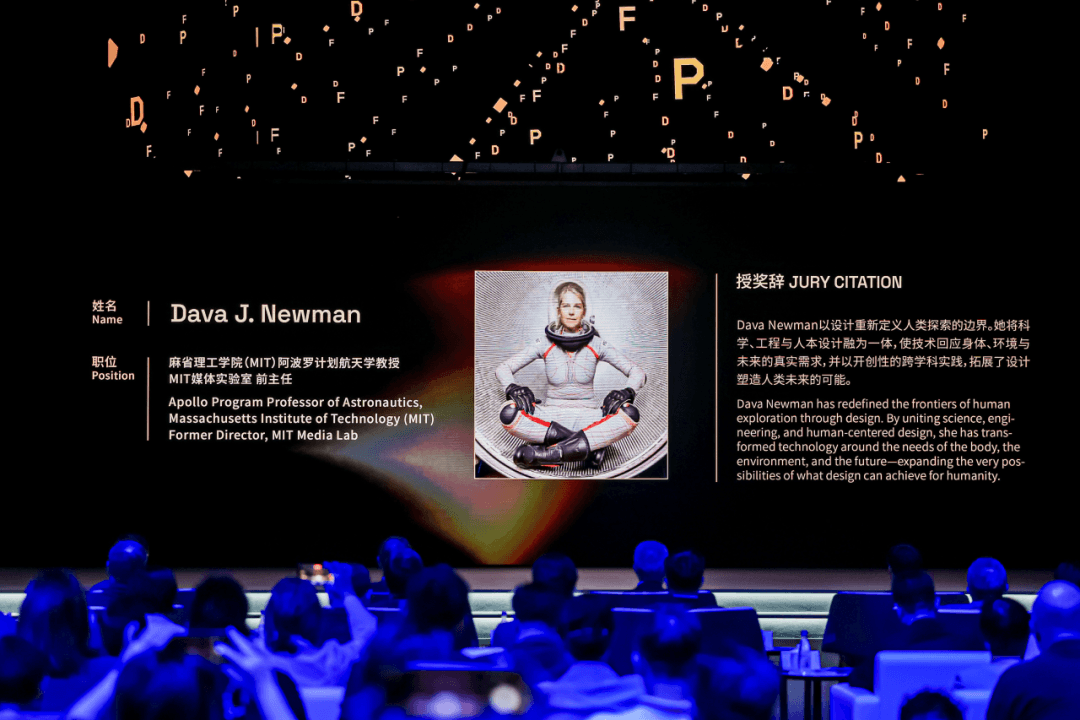
Dava J. Newman
Design's Frontiers Reach to the Stars
Professor Dava J. Newman is a world-renowned scientist working at the intersection of engineering and design. Her principal academic achievements lie in the deep integration of design and aerospace engineering. She spent more than a decade developing BioSuit, a "second-skin" spacesuit for planetary exploration that uses mechanical counterpressure in place of conventional gas pressurization. Conventional spacesuits are bulky and heavy, requiring astronauts to expend considerable energy simply overcoming the resistance of the suit itself. BioSuit uses skin-tight elastic materials and shape-memory alloys to apply counterpressure to the body, greatly improving astronauts' freedom of movement in extreme environments. More than an engineering breakthrough, it exemplifies the integration of ergonomics, materials science and the demands of space exploration through design.
From July 2021 to June 2025, Newman served as director of the MIT Media Lab. A global leader in interdisciplinary innovation combining technology and design, the Media Lab breaks down traditional disciplinary barriers and blurs the boundaries between science, engineering, art and design. Its research is not constrained by established academic frameworks; researchers are encouraged to explore frontiers that may shape life decades into the future. With people at the center of its work, the lab explores fields ranging from artificial intelligence, climate and healthcare to space exploration and creative learning for children. Its research addresses both technological challenges and the social value of technology. During her tenure, Newman advanced major research initiatives in climate sustainability, responsible AI, women's health and space exploration, strengthened the lab's commitment to human-centered design, and maintained stability in its research and operations. After stepping down as director, she retained her position as MIT's Apollo Program Professor of Astronautics. She continues to collaborate with several Media Lab research groups on projects exploring space and the world of the future. In recent years, she has further integrated design with artificial intelligence, data science and Earth systems research. Through projects such as Earth Speaks, she is exploring new ways for technology and design to advance climate action and a sustainable future for the planet.
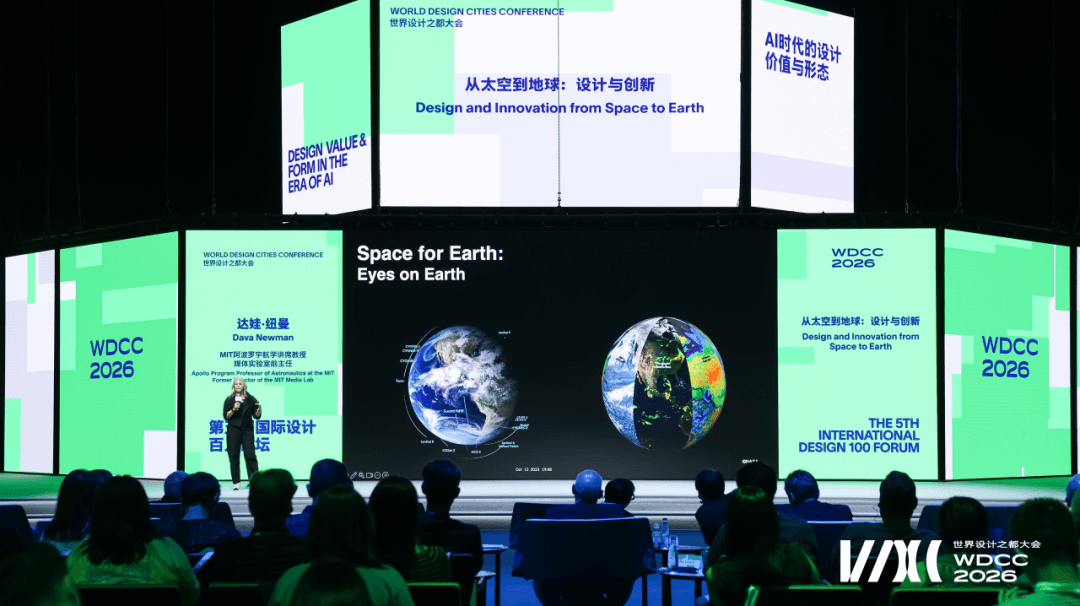
Dava J. Newman delivers a keynote address at the fifth International Design 100 Summit Forum,
held on the same day.
In recognizing her achievements, the jury noted that Newman redefines the boundaries of human exploration through design. By bringing science, engineering and human-centered design together, she enables technology to respond to the real needs of the human body, the environment and the future. Her pioneering interdisciplinary practice expands the possibilities for design to shape humanity's future.
Young Designers’ Rixin City: Using Design to “Save” Our Planet
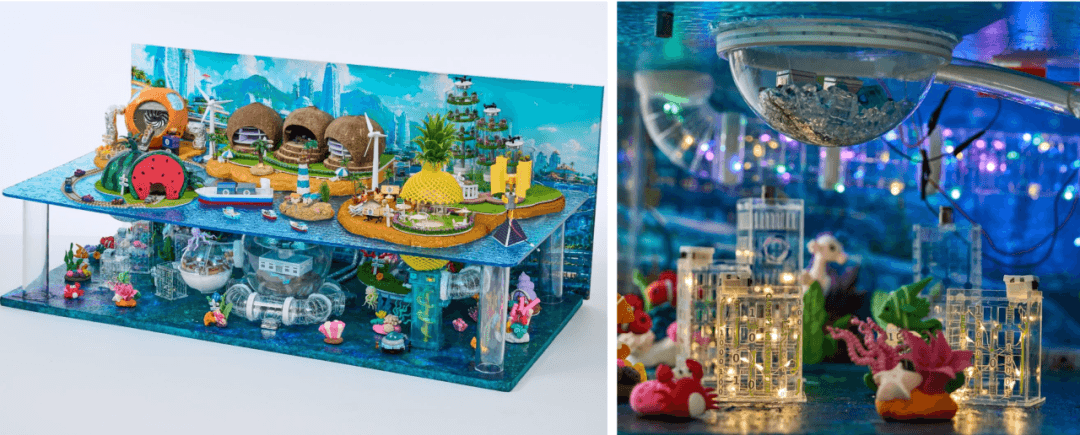
Rixin City, the award-winning project by four students from
Rihui Xincun Primary School in Shanghai's Xuhui District.
Alongside a leading scientist working at the frontiers of her field, a group of young students from Shanghai offered a vision of their own. The Innovation of the Year Prize went to Rixin City, created by four students from Rihui Xincun Primary School in Xuhui District. The project imagines a sustainable city in Wanning, Hainan, 100 years from now, focusing on two United Nations Sustainable Development Goals: Affordable and Clean Energy (SDG 7) and Sustainable Cities and Communities (SDG 11).
Responding to real challenges in Hainan, including frequent typhoons, fluctuating tourist numbers and unreliable transport of energy supplies to the island, the students designed a resilient city with components including a smart farm, a cold-chain center and a Blue Ocean Regeneration Center. Fruit and vegetable scraps and other food waste from homes and restaurants would be converted into biogas, organic fertilizer and reclaimed water at the regeneration center, creating an urban cycle of production, use and regeneration. An AI system would predict typhoons, visitor numbers and energy demand. Before a disaster, the city would fold away its collapsible farms and stockpile supplies; afterward, it would draw on local energy and recirculated resources to recover quickly. The jury praised Rixin City for its bold vision of the future city. Addressing energy, food, resource circulation and disaster response through systemic design, the project demonstrates exceptional concern for society, interdisciplinary thinking and an innovative mindset. It reveals the younger generation's potential to design the future.
These primary school students looked a century ahead, using design to consider energy, ecosystems and the needs of people facing disasters. This is precisely why FDP established its award for young innovators: to introduce design education from an early age and make concern for the real world a way of thinking that children can learn and develop.
Shanghai's Vision for Design:Design as a New Force Driving the Future
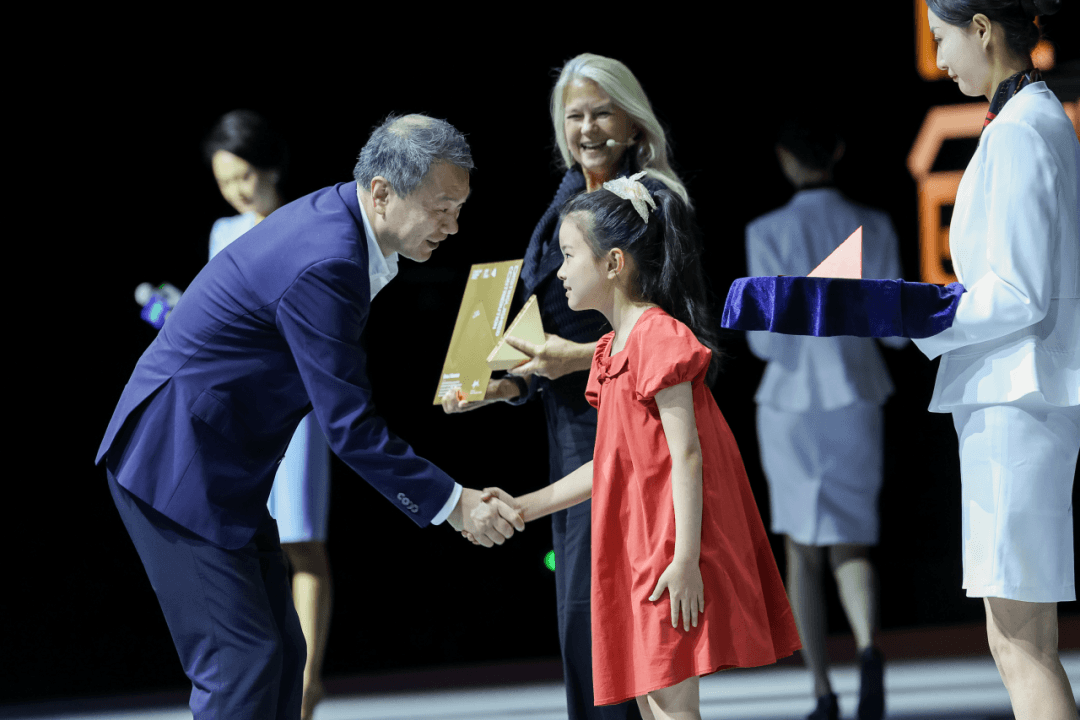
The team from Rihui Xincun Primary School in Shanghai's Xuhui District
wins the Innovation of the Year (K12) Prize for Rixin City.
From exploring the cosmos to safeguarding our planet, design is becoming increasingly integral to humanity's most far-reaching challenges. Across the four editions of the Frontier Design Prize since its establishment in 2022, the values it has championed have offered a powerful response to this shift. They have also clearly articulated Shanghai's vision for design on the global stage.

The Frontier Design Prize is a central part of the World Design Cities Conference's framework of "one prize, one think tank and one initiative." At the prize's inception, Yongqi Lou, one of its co-founders, Chair of the Jury and President of Shanghai University of Engineering Science, explained that its significance went beyond simply adding another design award to the world. By recognizing people and works that make pioneering contributions to design, the prize seeks to "guide the direction of global design" while expressing "Shanghai's stance and vision for design."
In Prof. Yongqi Lou's view, design has moved beyond a finishing touch at the end of the industrial value chain to become a strategic force driving systemic change in industry, cities and society. He advocates developing a new generation of designers who can work across disciplines as scientists, policymakers and social innovators. He also calls for design to evolve from a human-centered approach to one centered on the web of life, seeking collaboration and coexistence within the complex systems of ecology and technology.
The design Shanghai champions is concerned with people's lives and the long-term future of coexistence between humanity and nature, rather than technical spectacle for its own sake. Human-centered thinking and sustainability have been consistent themes across successive editions of FDP. Don Norman advocates technology that works with human cognition; John Thackara calls for design to serve the entire community of life. Young entrants have continued to focus on public issues such as fire safety and urban ecology. FDP's ambition for young people has always been for them to demonstrate an awareness of how design can solve problems, rather than simply create something visually appealing. Its commitment to nurturing that awareness from the outset reflects a long-term outlook that extends beyond short evaluation cycles.
The measure of design is not what appears in exhibition halls or on drawing boards, but whether it can address humanity's most urgent challenges, provide systemic solutions that span the cosmos and our home planet, and apply design thinking to real-world problems. This is the approach to design that the Frontier Design Prize has reaffirmed time and again and that the 2026 World Design Cities Conference will bring to an even wider audience: Shanghai's vision for design.


